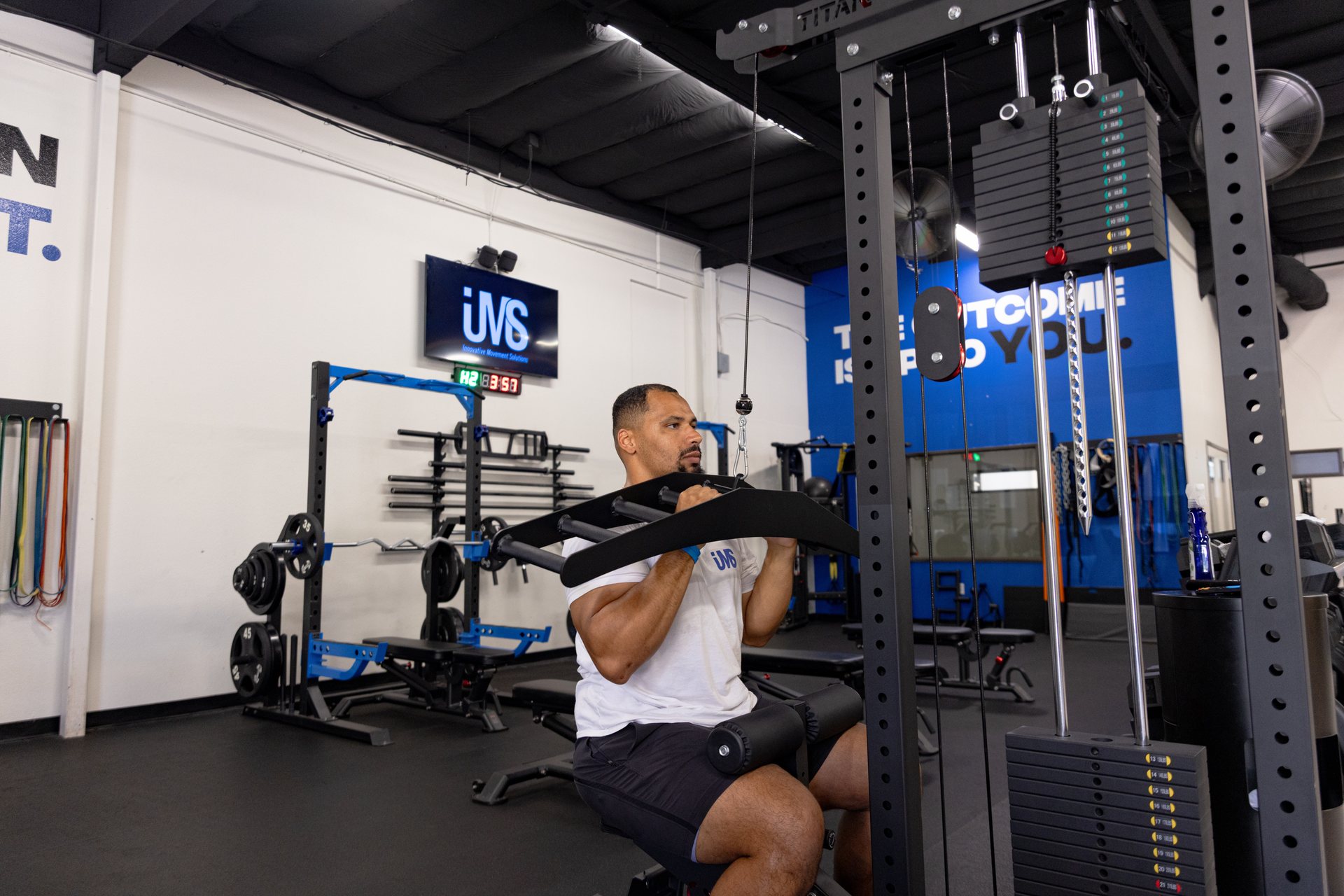
A good share of my clients are over fifty. Many arrive apologetic — a bit embarrassed about what they can't do anymore, half-expecting me to hand them light dumbbells and a resistance band and call it a day.
That's not what happens, and the reason is worth explaining.
What genuinely changes
Recovery takes longer. This is the real one. The session isn't the problem; the forty-eight hours afterward are. At twenty-five you could train hard four days running and get away with it. At fifty-five, two well-spaced hard sessions produce more than four stacked ones. This changes scheduling, not intensity.
Tissue tolerates surprise less well. Tendons and connective tissue adapt more slowly than muscle at every age, and the gap widens. What that means practically: the jump in load that felt fine a decade ago is the one that gets you now. Progression has to be earned rather than assumed.
Accumulated history matters more. By fifty most people are carrying something — an old knee, a shoulder that had surgery, a back that has opinions. That history shapes the program. It doesn't prevent one.
Muscle mass declines if unchallenged. Sarcopenia is real and it starts earlier than people think. But it's driven substantially by disuse, which makes it one of the more addressable things on this list rather than an inevitability.
What doesn't change at all
Muscle still responds to load. This is the important one. The adaptive machinery doesn't switch off at a birthday. People in their sixties, seventies and eighties gain strength from resistance training. The response may be somewhat slower, but the direction is identical.
You still need meaningful load. The instinct to hand older clients pink dumbbells is well-meant and counterproductive. Strength requires a challenge. A load light enough to be certainly safe is usually light enough to be certainly useless. The job is finding the right load for the joints you actually have — which is a coaching problem, not an age problem.
The order still matters. Assess first, prepare the joints, then load. If anything this matters more with each decade, because the cost of loading a range you don't control goes up.
Consistency still beats intensity. It always did. It's just more obvious now.
The thing people get wrong in both directions
Two failure modes, and I see them about equally.
Training like it's 1995. The former athlete who runs the program that worked at twenty-eight, ignores the recovery signal, and gets hurt roughly every fourth month. He concludes his body is failing. His body is fine; the programming is twenty years out of date.
Training like it's fragile. The person who has been told to be careful so many times that they've stopped challenging anything. Walking, light bands, nothing that ever feels like effort. This one is the more common and the more costly, because the thing that preserves independence into your seventies and eighties is strength — and strength is not built by avoiding difficulty.
The middle path isn't a compromise between them. It's a different approach: find out precisely what each joint can do, load inside that, and expand it deliberately.
Why the assessment matters more with every decade
At twenty-five you can get away with a generic program because your margin for error is enormous. Your tissue tolerates a bad exercise choice and your recovery covers a scheduling mistake.
At fifty-five the margin is narrower, which makes accuracy worth more. Knowing that your left hip has notably less internal rotation than your right, or that your ankle restriction is why your squat looks the way it does, is the difference between a program that builds you and one that grinds on the same sore spot for months.
That's the whole argument for measuring first. Not because older bodies are fragile, but because guessing is more expensive when you can't absorb the error.
What a program actually looks like
Broadly the same shape as anyone else's, with different dials:
- Joint preparation every session, without exception
- Compound strength work — pushing, pulling, hinging, squatting, carrying — loaded through ranges you control
- Two to three sessions a week, spaced with recovery in mind rather than crammed
- Progression earned by demonstrated control, not by the calendar
- Re-assessment every six to eight weeks so we're steering by data
Nothing about that is a senior programme. It's a program built on what your joints can actually do, which is how it should have been done at thirty too.
Where to start
If you're carrying an old injury and unsure whether training is the right next step, that uncertainty is precisely what the free Movement Assessment resolves. Thirty minutes, no workout, no cost. If something needs a physician before it needs a barbell, you'll hear that plainly.
IMS provides coaching, movement education, and recovery services. IMS does not diagnose, treat, or cure medical conditions. Consult a physician before beginning any exercise programme, particularly if you have a chronic condition, surgical history, or take medication.