Home / Morning routine
The five-minute morning routine.
Six joints, one slow circle at a time. This is the joint work that opens every session at IMS, shortened to something you can do before coffee without changing clothes.
Three rules that make it work
Slow. One circle takes about ten seconds. Speed lets momentum carry your limb through ranges you don't actually control, which is the whole thing we're trying to avoid.
Braced. Tense your midsection like someone is about to shove you. The rest of the body stays rigid while one joint moves freely — that isolation is what makes it a joint exercise rather than a stretch.
Yours. Go to the edge of the range you can produce on your own, not the edge of what's possible with help. If it starts shaking or stuttering, you've found your edge. Work there, not past it.
-
01 · 45 seconds
Neck
- Set up
- Stand or sit tall. Shoulders down and completely still — the only thing moving is your head.
- The movement
- Drop your chin toward your chest, then roll your head slowly to one side, tip it back, continue around to the other side, and return to the chin. One full circle should take about ten seconds.
- Watch for
- Your shoulders creeping up toward your ears, or your whole trunk turning to help. Brace your midsection and let only the neck move.
- Do
- 2 circles each direction
-
02 · 60 seconds
Shoulder
- Set up
- Stand tall, one arm at your side, opposite hand on the moving shoulder so you can feel it staying put.
- The movement
- Thumb pointing forward, sweep the arm up in front of you, reach overhead, rotate the palm out as the arm travels behind, and bring it down and around to the start. Slow enough that nothing swings.
- Watch for
- The shoulder shrugging upward, or the ribcage flaring to get more range. If the circle gets bumpy near the top, that's the part worth knowing about.
- Do
- 2 circles each direction, each arm
-
03 · 45 seconds
Spine
- Set up
- Sit tall on the edge of a chair, knees together, arms folded across your chest.
- The movement
- Keeping the knees and hips completely still, rotate your upper body to one side as far as you can control, pause for a beat, then rotate to the other. Let the head follow the chest.
- Watch for
- Hips sliding or knees separating to buy extra rotation. If your knees move, the range came from somewhere other than your spine.
- Do
- 4 rotations each direction
-
04 · 75 seconds
Hip
- Set up
- Stand next to a wall or chair and hold it for balance. Stand tall on one leg.
- The movement
- Lift the other knee up in front of you, then take it out to the side, rotate it back behind you, and return. The knee traces the biggest circle you can control without your pelvis moving.
- Watch for
- The low back arching or the pelvis tipping to make the circle bigger. A small, honest circle beats a large one your back is producing.
- Do
- 2 circles each direction, each leg
-
05 · 45 seconds
Knee
- Set up
- Hold your balance and lift one knee to about hip height. Keep the thigh still.
- The movement
- With the thigh frozen in place, draw a circle with your foot — the movement comes from the knee only. Small circles are normal here.
- Watch for
- The thigh drifting around to help. If the thigh moves, you're doing a hip movement.
- Do
- 2 circles each direction, each leg
-
06 · 45 seconds
Ankle
- Set up
- Sit down and extend one leg out in front of you, heel resting on the floor.
- The movement
- Point the toes away, then sweep the foot out to the side, pull the toes back toward your shin, and roll around to the inside. Keep the shin still.
- Watch for
- The whole leg rolling in and out. Hold the shin still and let the ankle do the work.
- Do
- 3 circles each direction, each foot
What to notice over time
Done daily, this stops being an exercise and becomes a readout. You'll learn what each circle normally feels like, which means you'll notice the morning a hip catches somewhere it didn't last week. That noticing is worth more than the five minutes.
You are not trying to make the circles bigger by forcing them. Range that arrives because you pushed harder is not range you own. It gets bigger by being trained slowly and consistently, and it takes longer than you want it to.
The obvious limitation
Nobody is watching you do this.
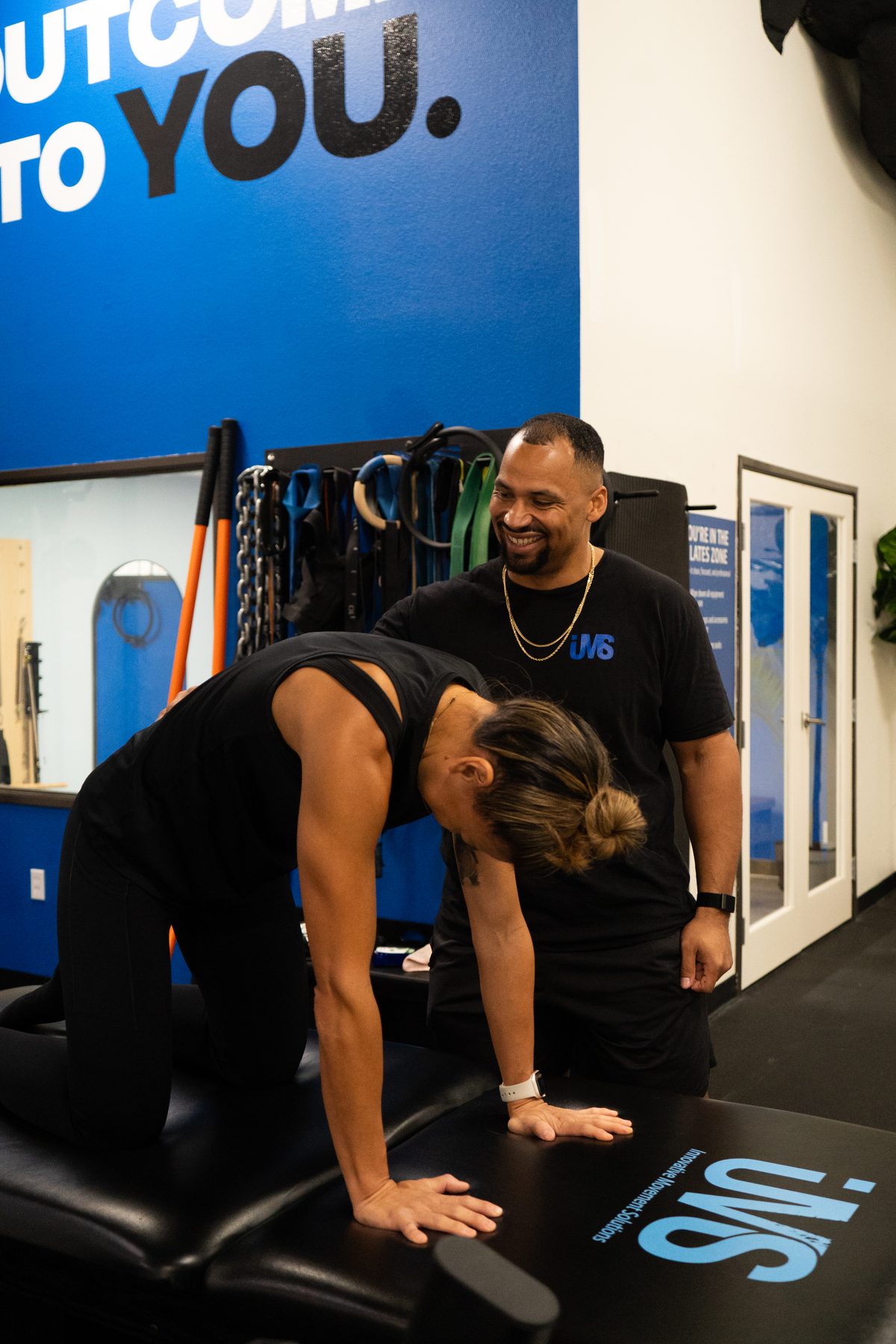
A routine on a screen can't tell you that your shoulder is shrugging, or that the rotation you think is coming from your spine is actually coming from your hips. Those are the two most common errors and both are invisible from the inside.
That's the entire argument for having someone assess you once, properly, so the work you do alone is the right work.
Start here
Thirty minutes. No workout. No cost.
A full joint-by-joint assessment with Jason, and a plain read on which of these six are worth your attention.